Terms of Use
All images of this website are copyrighted. They must not be reproduced without prior permission by author.
Privacy Policy
Cookie Policy
Website Terms of Use
Works /
Portraits
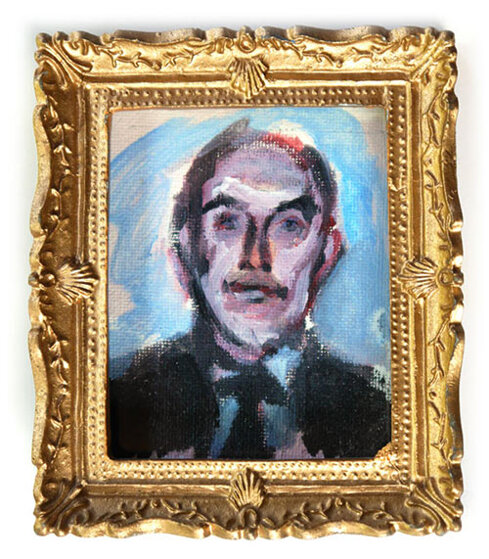
G.Grandi
(Acrylic on canvas, 5 × 7 cm, with frame)
"Marabini’s portraits radiate an enigmatic energy that leaves viewers astonished, yet at the same time deeply gratified. Indeed, the intense inner luminosity of their gazes stirs a revitalizing movement of the spirit, in a kind of poignant catharsis.”
— Guido Grandi, Attorney at Law, Bologna
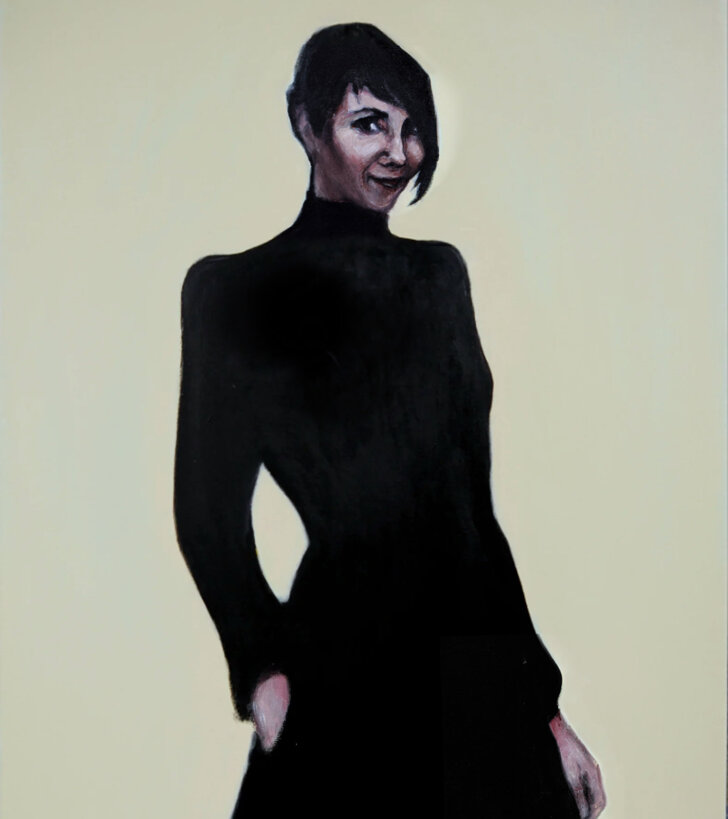
La marchesa (Acrylic on canvas, 30 × 40 cm)
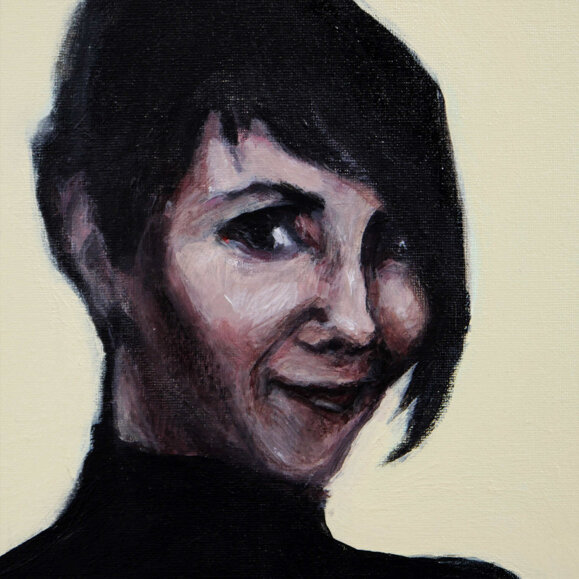
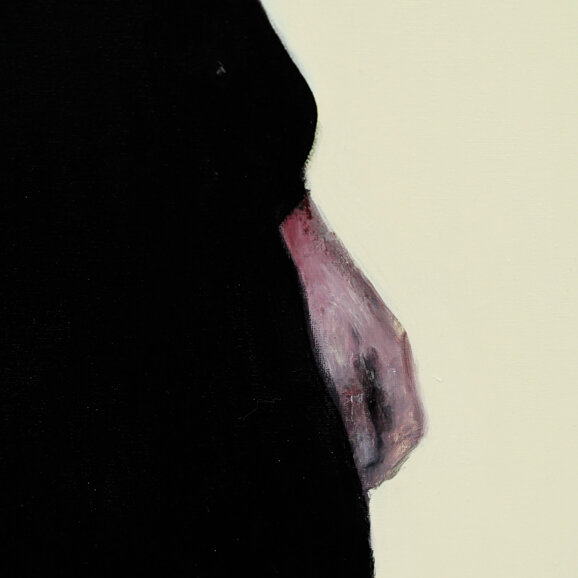

Dan (Acrylic on canvas, 80x120 cm)

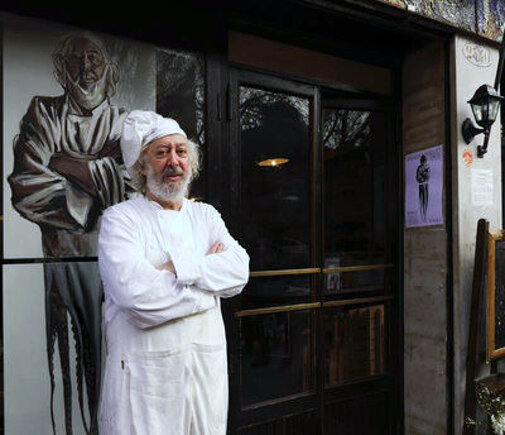
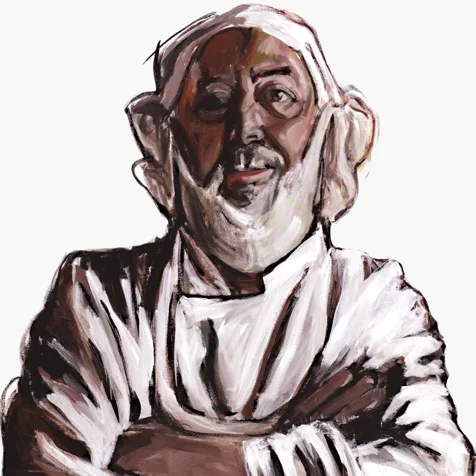

Medusa? (Acrylic on canvas, Ø 80 cm)
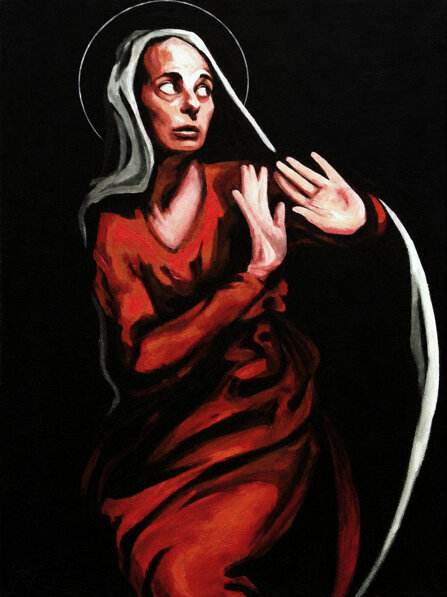
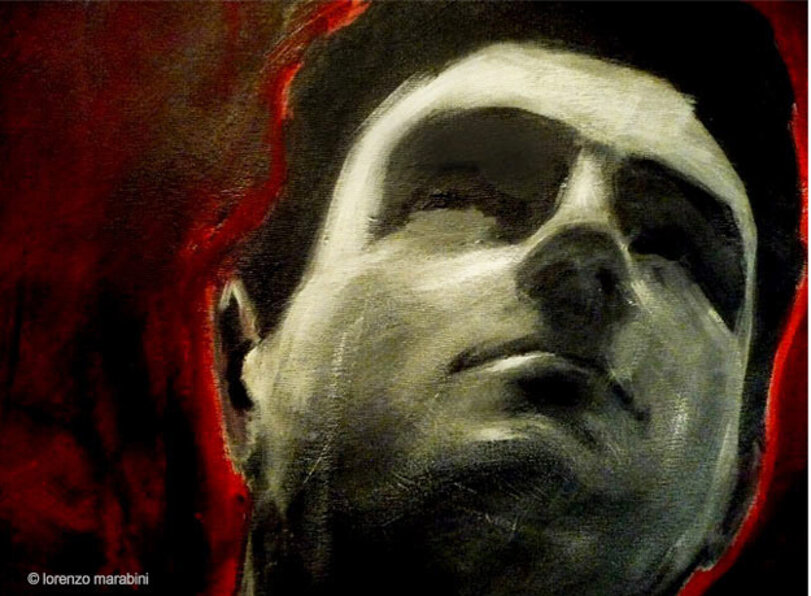
Discobolo - Lorenzo Marabini (Acrylic on canvas, 300x200 cm, det.)
C-FATAL (Acrylic on canvas, 70x100 cm)

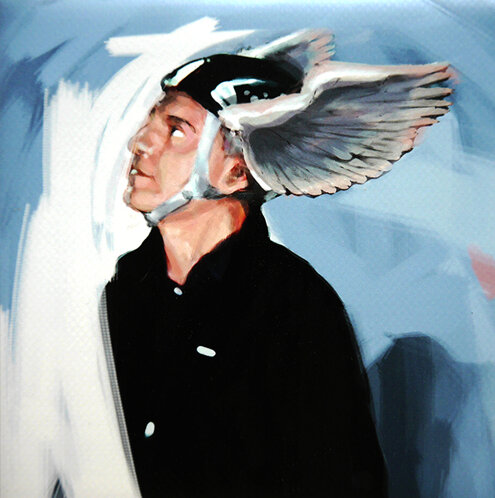
Little Portratis (Acrylic on canvas, 5x7 cm + frame)
Little Portratis (Digital artwork, printed on canvas, 151x15 cm)
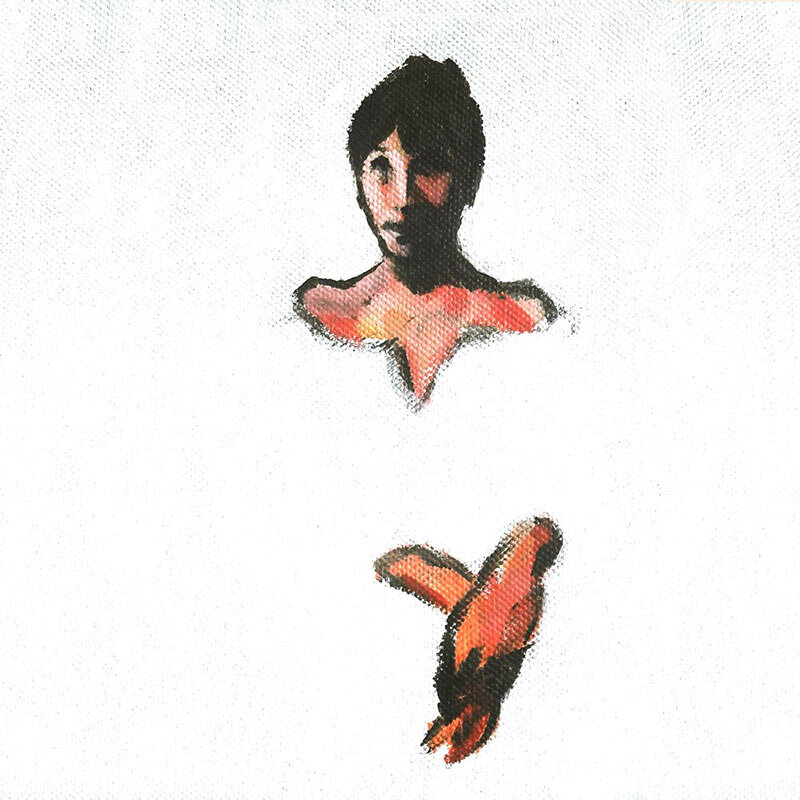
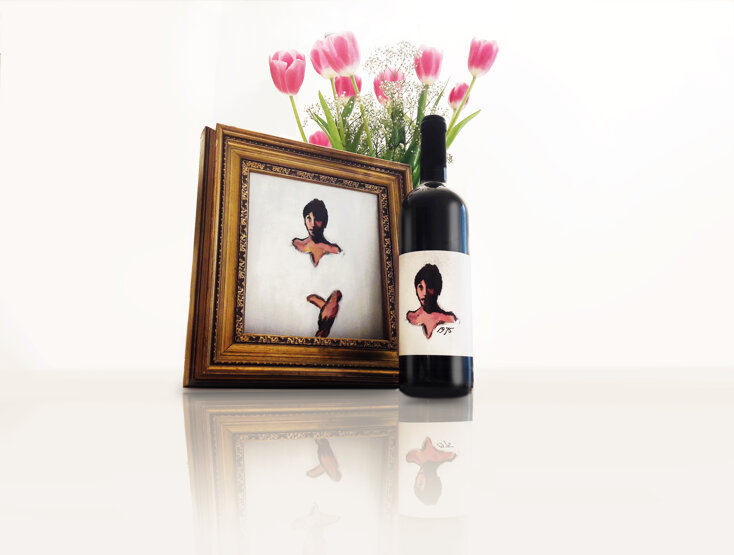
my beloved M. Little Portratis (Acrylic on canvas, 5x7 cm)
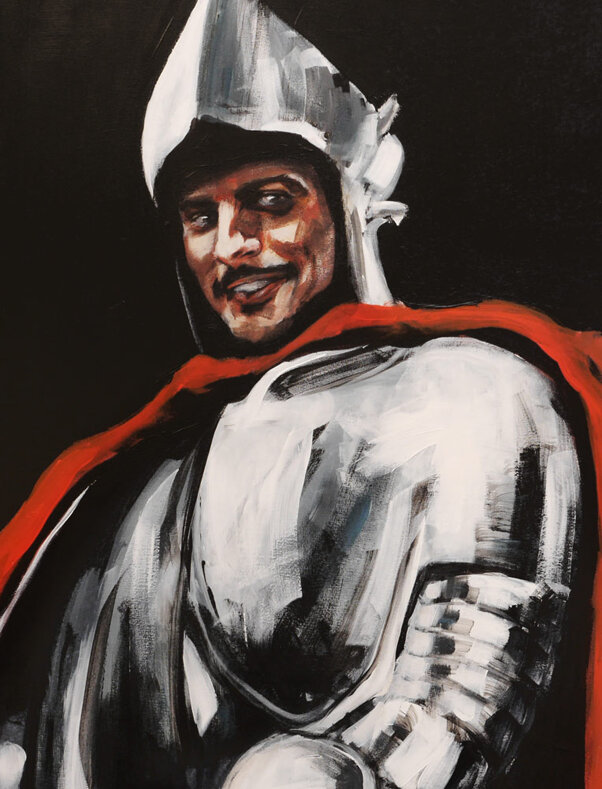
Lorenzaccio da Cervia (self portrait)
(Acrylic on canvas, 100x150 cm, det.)
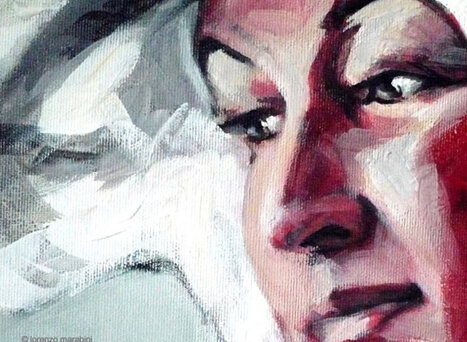
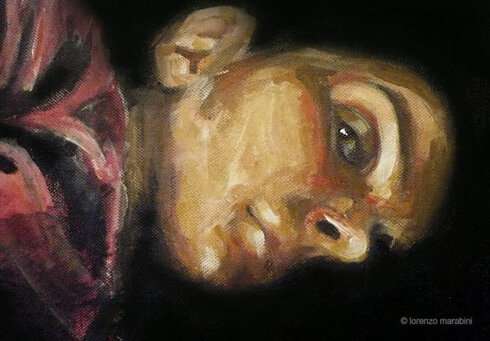
T . (Acrylic on canvas, 100x70 cm, det.)
Mariella (Acrylic on canvas, 100x70 cm, det.)

Olio su Teglia (Acrylic on canvas, on baking tin)
Individuals |
- by Annalisa Cattani
Even the secondary realm of everyday objects that surround us occasionally bursts into this gaze, shaped by an arcane practice, demanding a physical presence unmediated by painting.
This is the case with Olio su teglia (Oil on a Baking Tray), a humorous verbal-visual construction that places a self-portrait on a cooking pan, acting as a comic detonator that parodies formulaic conceptualism.
Yet the work goes further. It is not merely an object of contemplation and evocation, but becomes the instrument of a linguistic game reminiscent of the Freudian Witz. Once again, we find ourselves confronted with a mental sculpture.
The Witz, or joke, is indeed the only moment in which the unconscious is verbalised, translated into a comprehensible and pleasurable language, without being conveyed through dreams or neurotic symptoms.
In moving from these forms of expression to the language of the joke, one moves, even involuntarily, from “the non-communicative to the communicative, from the not necessarily verbal to the verbal” (1).
This is a compromise rooted in the tendency of adult rationality to confine what is taboo within a particular kind of figurative language, a process that begins in childhood.
This compromise becomes a source of pleasure because it allows what has been repressed to surface indirectly, yet in a way that can be inferred. When the implication is understood, laughter is released, allowing the discharge of energy that had been held back in order to repress what is not considered rationally appropriate to express.
“Man is a ‘tireless seeker of pleasure’ (…) and finds it exceedingly difficult to renounce a pleasure he has once enjoyed (…). A cheerful mood, whether arising from within or induced by an intoxicating substance, weakens inhibitory forces, including critical judgement, making accessible once again sources of pleasure that had previously been burdened by repression” (2).
Thus, Lorenzo sulla teglia (Lorenzo on the Baking Tray) seeks, more or less consciously, to tell us something further, something that this time sculpts his very soul, leaving us free to enjoy guessing what it might be, or simply asking him.
Is the reference to Saint Lawrence the Martyr, who was burned alive on a gridiron, merely coincidental?
Could it be that the condition of being an artist places one between the mystery of creation and the expectations of post-production, expressed through familiar metaphors that turn into questions: “What's cooking?” “Do you feel something simmering inside you?”
As we can see, the pan is not a pan, just as the pipe is not a pipe for Magritte, or the chair is not a chair for Kosuth.
The pan becomes a topos, bringing the artist down from the status of genius loci to that of sculptor of the self, from prophetic poet to individual — literally, an undivided being — poised between normalisation and subjectivity, between the public and the domestic.
Yes, domestic rather than merely private: between the nest and the community, introspection and relationships.
Perhaps it is precisely here that we most clearly discover the depth of this sophisticated and courageous artistic inquiry, moving forwards and backwards through the folds of art history, not to establish new masters, but to discover new tools for investigating the self.
(1) Sigmund Freud, Il motto di spirito, Bollati Boringhieri, Turin, 1991, pp. 150–151.
(2) Ibidem
La Casa di Riposo (The Retirement Home) — Graphite on paper, various dimensions.
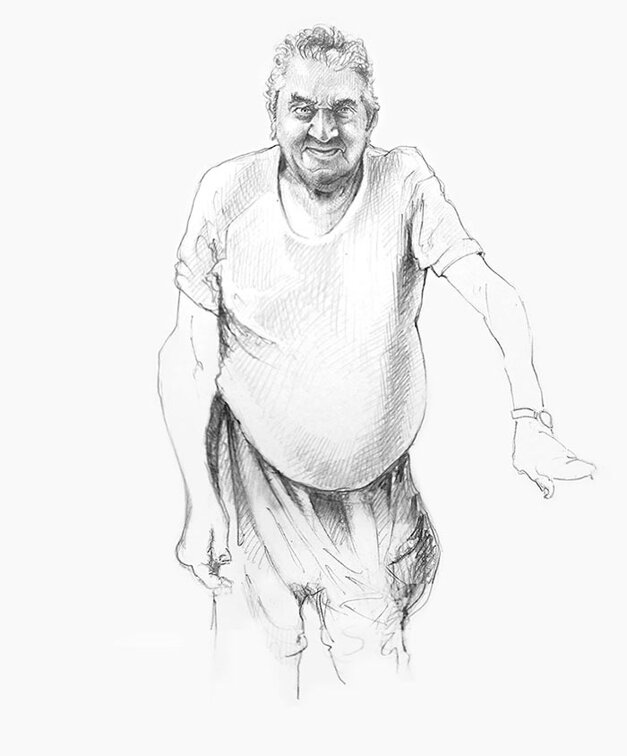


Feelings and Passions That Endure Behind a Portrait. A Moving Personal Experience
— By Lorenzo Marabini (published in the Imola weekly newspaper sabato sera, 2000)
What follows is the personal account of Lorenzo Marabini, a conscientious objector performing civilian service at the Casa di Riposo per Inabili al Lavoro, a residential care home on Via Venturini.
Lorenzo portrayed some of the residents, and his drawings became the subject of an exhibition [...].
The impressions and reactions of those portrayed offer a glimpse into a world that Marabini sought to depict. They also testify to the success of an exhibition whose significance extends beyond its artistic value.
“When I began my civilian service at the care home, I must admit that the experience was anything but easy at first. It was difficult to become emotionally involved in a world where life reminds you, day after day, relentlessly, of its most dramatic and inevitable aspects: physical decline, loneliness, waiting...
And yet, there were many opportunities to discover how feelings and passions endure. Indeed, I was often genuinely surprised by expressions of joy and enthusiasm. I also found something deeply constructive in certain bursts of hearty laughter or moments of self-deprecating humour, which revealed a wisdom that, I believe, has long since been forgotten...
The opportunity I was given to exhibit portraits of around thirty residents turned out to be an experience filled with unexpected and deeply gratifying reactions. I saw smiles of surprise as people recognised themselves ‘on display’ in a rather unusual ‘gallery’. I came to appreciate the immeasurable value of the gratitude expressed by those who may no longer be accustomed to receiving someone else's attention. I even witnessed the deeply moving emotional responses of others.
I tried, in my own way, to make a personal contribution to the civilian service I had been assigned to.”